


Spain’s Balearic Islands will not promote the 12 August 2026 eclipse as tourism, while preparing 26 observation zones for peak summer pressure.

Spain’s Balearic Government and the island councils have chosen not to promote the 12 August 2026 solar eclipse as an additional tourism attraction, while preparing 26 official observation zones for an archipelago where more than two million people could coincide at the height of summer. The decision, reported by elDiario.es’s account of the eclipse and tourism debate, places Ibiza, Mallorca, Menorca and Formentera at the intersection of an exceptional astronomical event and a long-running argument over the limits of mass tourism.
The eclipse arrives at the busiest point of the Balearic year
The islands sit close to the edge of the visibility band for a total solar eclipse that falls during the hottest week of the summer. The phenomenon will be observable from Mallorca, Menorca, Eivissa and Formentera, but its timing is central to the authorities’ approach: the event does not arrive during a quiet period when tourism could be spread into less-visited areas. It arrives when the archipelago’s roads, emergency services and natural spaces are already under maximum seasonal pressure.
Figures cited in the elDiario.es report illustrate the scale of that pressure. The Balearic Islands have a resident census of around 1.2 million people, yet the Institut Balear d’Estadística’s human-pressure index recorded more than two million people present across the islands between 18 July and 23 August 2025. The highest recorded point was 2,080,731 people on 8 August 2025.
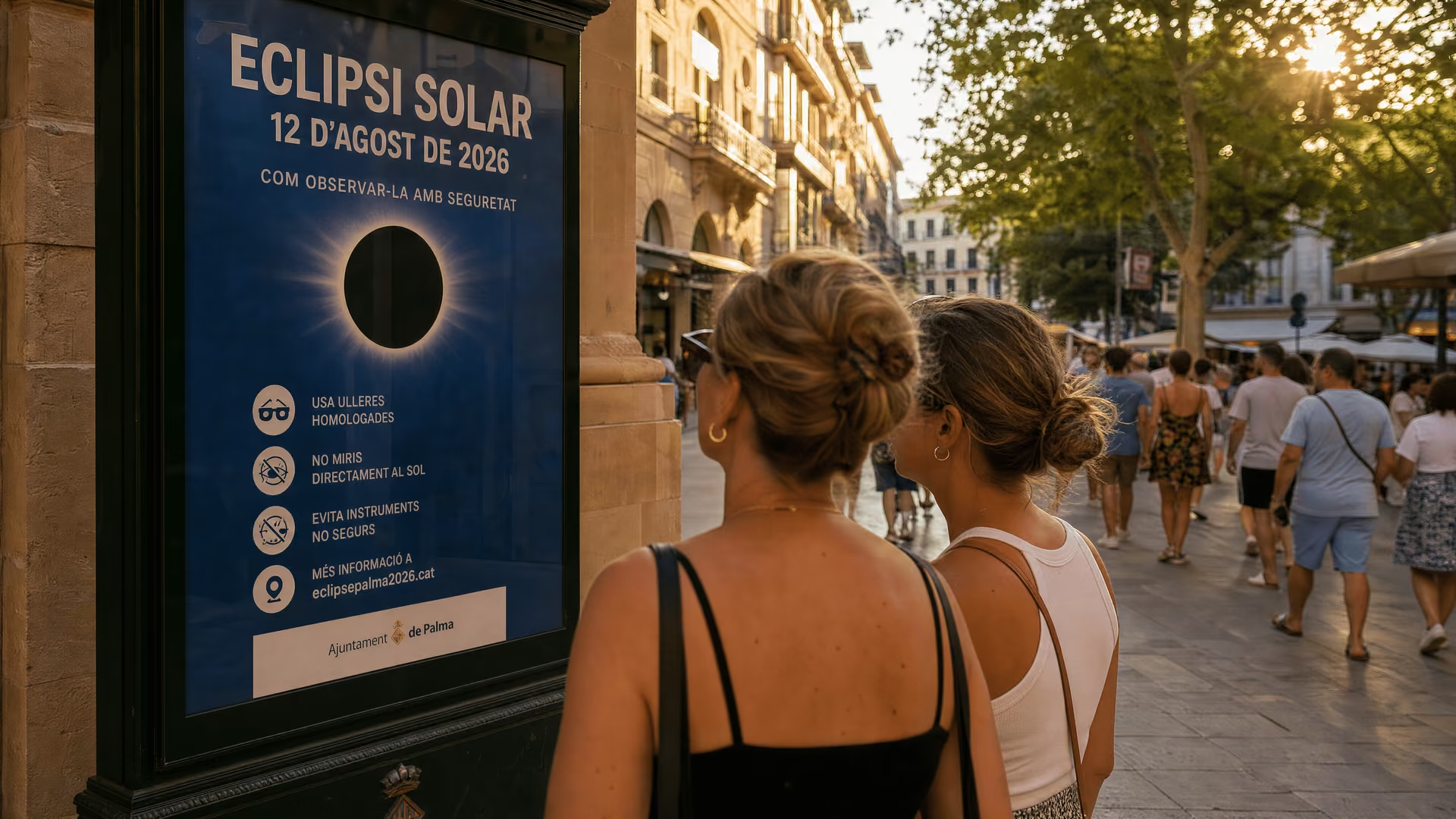
The result is an unusual public-policy position. The Balearic authorities are informing residents and those already on the islands about how to observe the eclipse safely, but they are not presenting it as a reason to add new arrivals during the middle of August. The distinction matters in an economy that has traditionally used exceptional events and natural attractions to generate additional demand.
Resident population and peak summer human pressure (people)
A safety operation replaces a tourism campaign
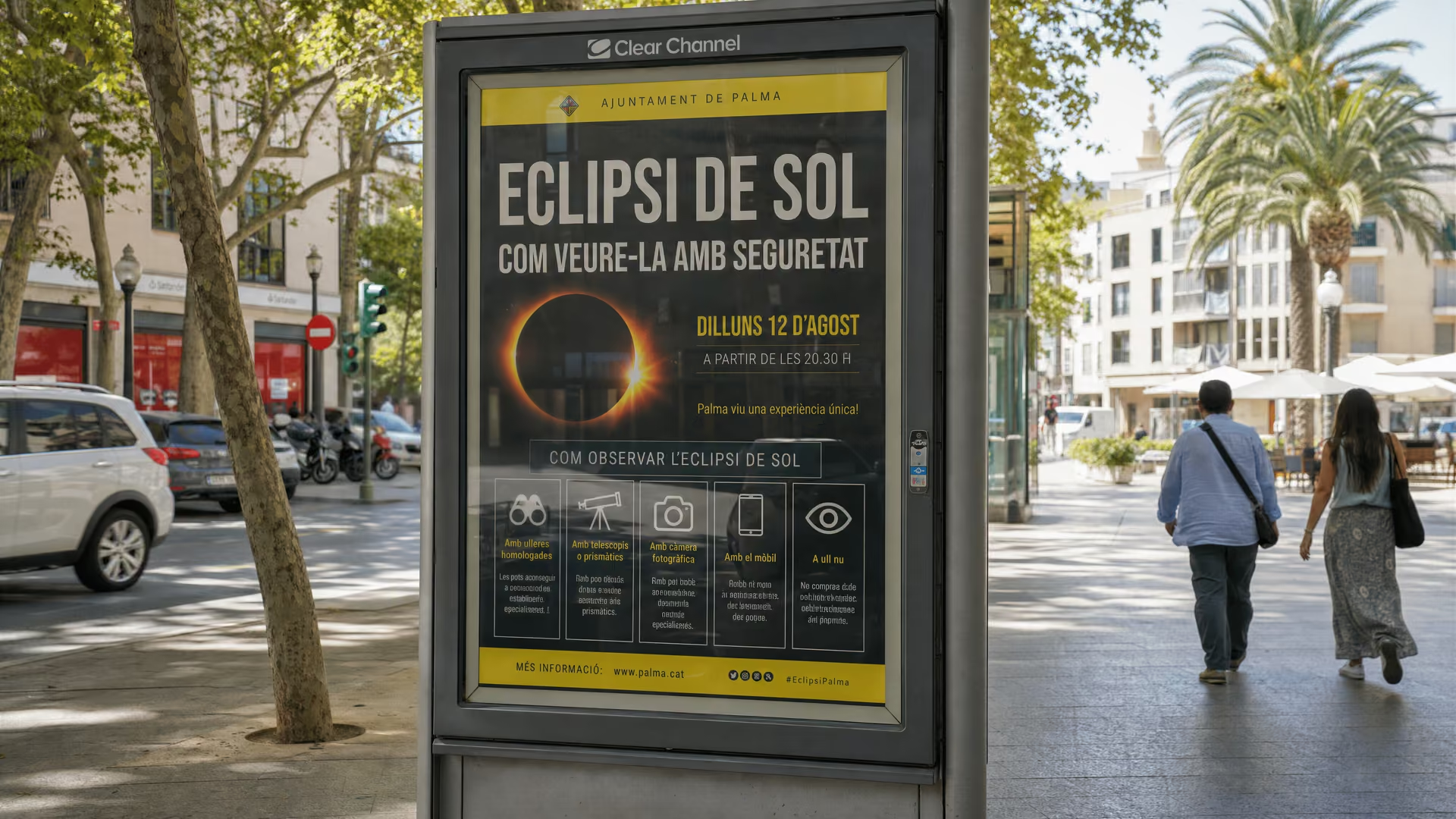
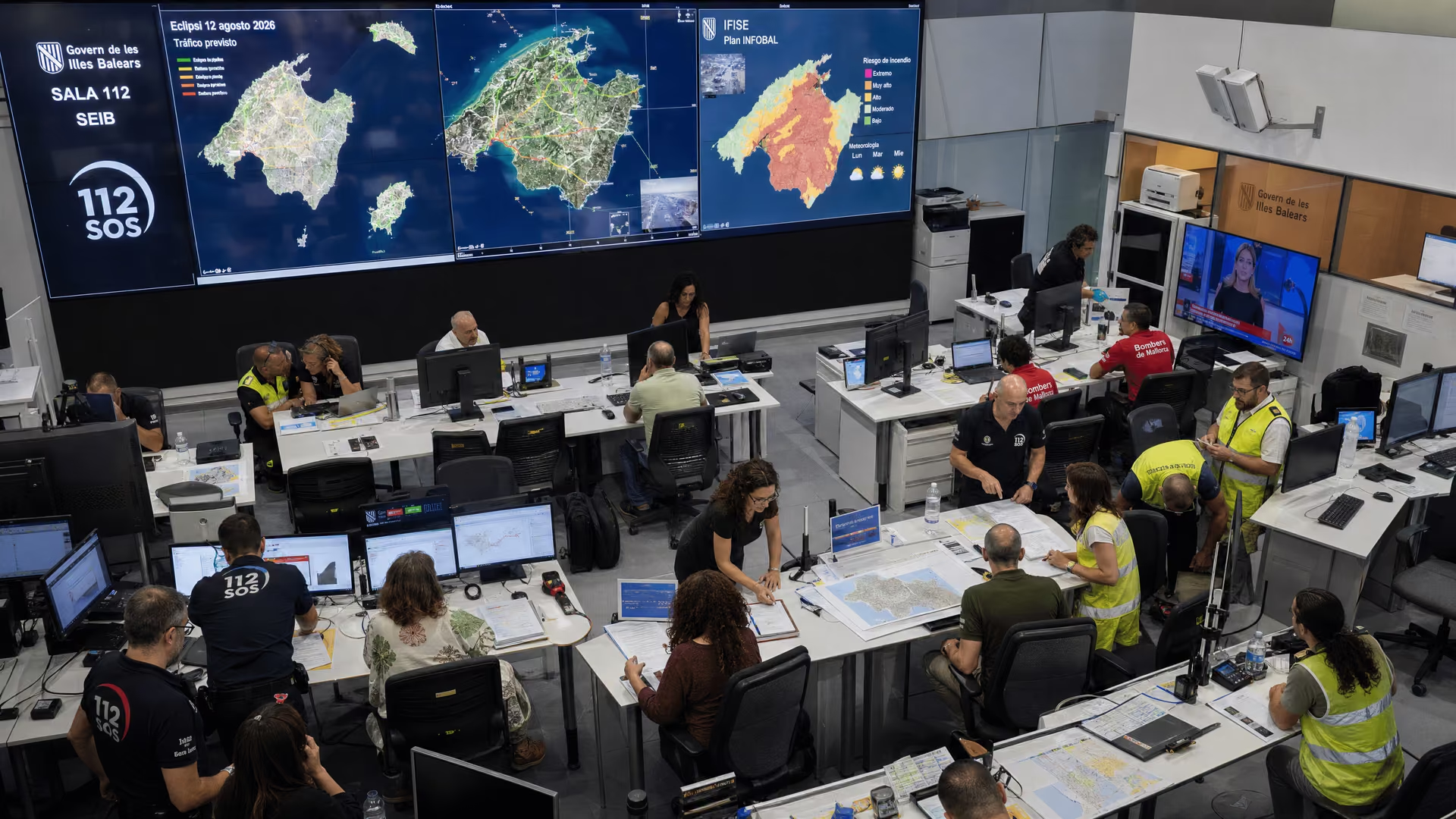
Instead of a promotional campaign, the Balearic Government and the island councils are concentrating on control, information and emergency planning. The authorities have designated observation areas, prepared traffic restrictions and organised a large wildfire-prevention operation. The official measures are intended to limit the uncontrolled concentration of people in locations where access is difficult, evacuation would be slow or the risk to the surrounding environment is high.
The plan includes 26 official observation zones distributed across the four islands, with an initial combined capacity of about 300,000 people according to supporting reporting. Nine of those zones are on Mallorca. Road access to areas of high natural value may be restricted from around 3pm to 9pm, with the possibility that restrictions could begin earlier. Sensitive locations include parts of the Serra de Tramuntana, viewpoints, coves, beaches, sanctuaries and lighthouses.
The emergency response also includes 161 forest firefighters in the operation described by the Balearic Government as unprecedented. The authorities have made an application developed by AstroMallorca an official information tool, using it to communicate observation details and encourage people to avoid unnecessary journeys.
- Official observation zones are being used to manage concentrations of people.
- Road restrictions are planned for access routes to sensitive natural areas.
- Wildfire-prevention resources include 161 forest firefighters.
- The public information strategy emphasises safety, legal compliance and reduced movement.
- The Serra de Tramuntana is being treated cautiously because difficult access could complicate evacuation.
Pablo Gárriz, the Balearic Government’s director general of Emergencies, described the problem as one of uncertainty: the islands contain many possible viewing points, but the authorities cannot know in advance where people will gather. His position, as reported by elDiario.es, is that existing public-safety and civil-protection protocols should be applied while maintaining a balance between individual freedoms and collective security.
Ibiza faces the same seasonal pressure in a smaller space
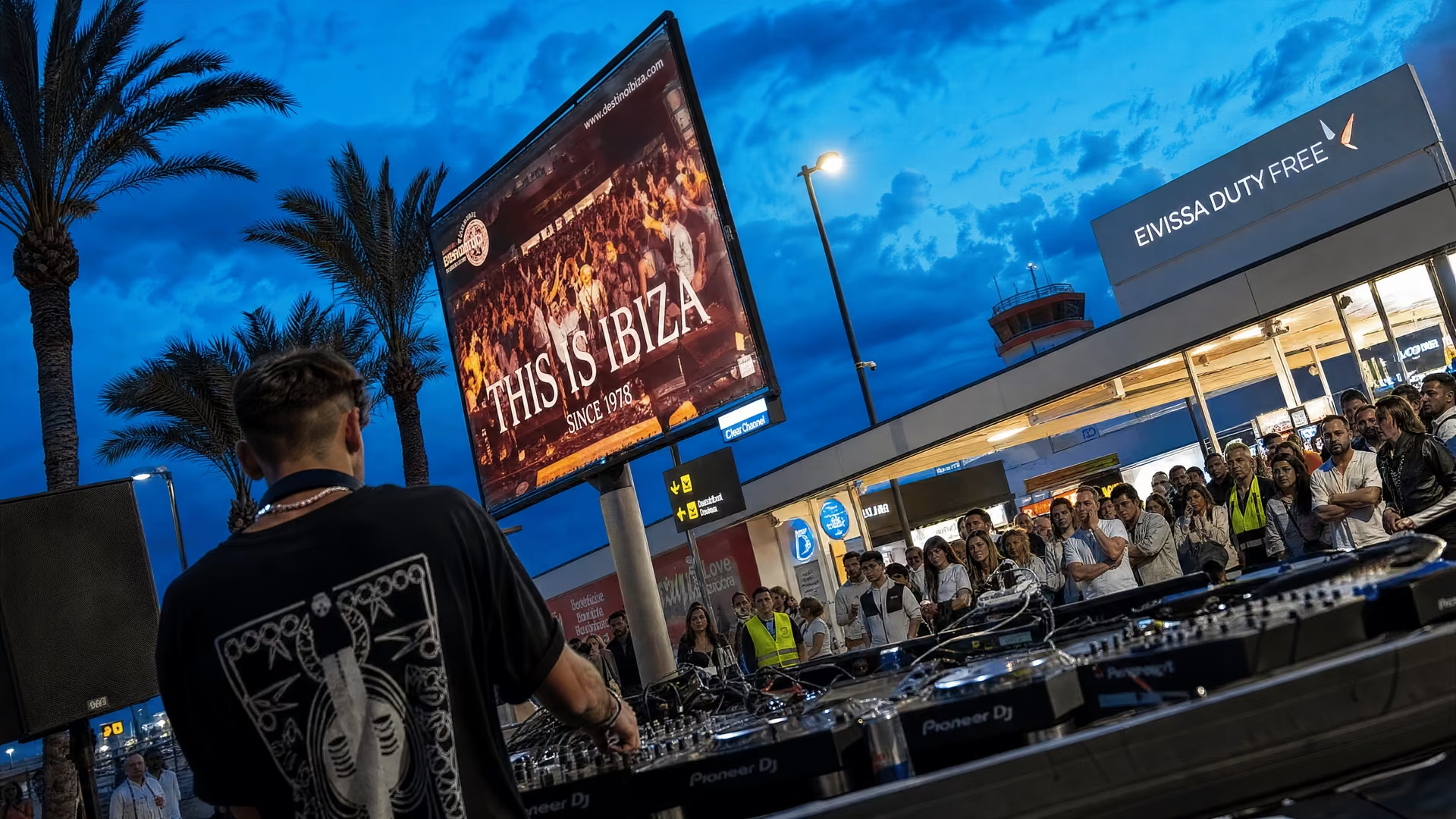
The decision has particular relevance for Ibiza, where the seasonal increase is especially visible. Human pressure on Eivissa is described as rising from about 160,000 people to around 320,000 at the height of the season. Juan Miguel Costa, the island’s director of tourism, argued that the eclipse should not be promoted in mid-August because people already visiting for the summer will overlap with those seeking a viewing point.
Costa’s position was not that the eclipse lacked interest. Rather, he distinguished between an event that could help distribute tourism during a quieter month and one that arrives when the island is already full. In his view, the most sensible approach is to keep activity in controlled spaces rather than encourage an additional movement of people across the island.
That logic is consistent with the practical pressures reported elsewhere in Ibiza. Seasonal demand already affects roads, water infrastructure and public services, while local authorities have been addressing capacity issues such as parking and desalination. The eclipse therefore becomes a test of whether the island’s existing summer systems can absorb a new, unpredictable pattern of movement without an official campaign adding to it.
| Island | Reported position or role | Main management concern | Source |
|---|---|---|---|
| Mallorca | Largest concentration of official observation planning | Traffic, wildfire risk and pressure on the Serra de Tramuntana | Balearic eclipse and tourism report |
| Menorca | Within the eclipse visibility area | Managing observation and access during peak season | Balearic eclipse and tourism report |
| Eivissa | No additional mid-August promotion supported by island tourism authorities | A seasonal population increase from about 160,000 to 320,000 | Balearic eclipse and tourism report |
| Formentera | The one island reported to have promoted the astronomical opportunity | Keeping movement manageable on a small island with limited roads | Balearic eclipse and tourism report |
For Ibiza residents, the policy also clarifies what the eclipse does not mean. It is not an invitation from the island administration to travel to Eivissa for the event, and being present on the island does not guarantee access to any particular location. The authorities’ approach is based on managing people already there and limiting uncontrolled concentrations, not on creating a new visitor product.
Formentera takes a different line
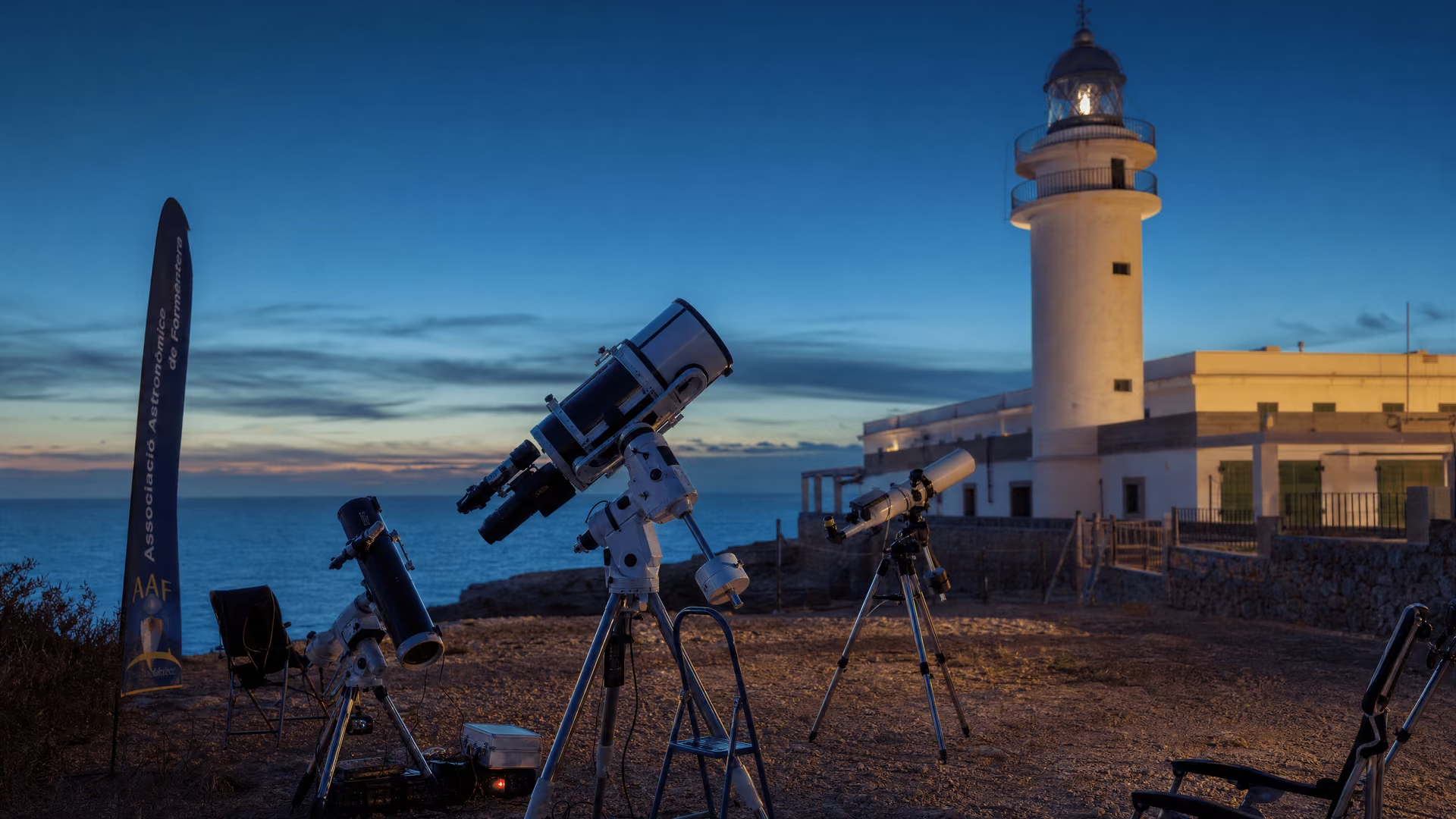
Formentera is the exception within the wider Balearic approach. Its island council has presented the eclipse as an opportunity to diversify tourism while making use of the island’s dark skies and its existing recognition for astronomical observation. The campaign, described in the source material as “Formentera looks to the sky”, frames the event through the island’s natural conditions rather than through a large-scale mass event.
The difference reflects Formentera’s scale as much as its promotional choice. The island has only two main roads, and the official observation area at Es Cap is planned for a capacity of 500 people. Jordi Alemany, president of the Associació Astronòmica de Formentera, said the association had been warning political leaders since October that the eclipse would be historic. He also said the group welcomed the decision to support public information and provide approved viewing glasses.
That approach does not remove the island’s capacity limits. It makes them more explicit. A small, defined observation area is easier to regulate than an informal gathering spread across remote roads, beaches or coastal viewpoints. The Formentera example therefore sits between promotion and containment: it presents an astronomical identity while relying on a tightly limited physical setting.
In a small island, it is easier to regulate the movement of people because there are only two roads.
Jordi Alemany, president of the Associació Astronòmica de Formentera
The eclipse exposes a deeper argument about Balearic tourism
The decision not to promote the eclipse has become part of a wider debate over whether the Balearic Islands are reaching the limits of their current tourism model. The islands received 19 million visitors in 2025, eight million more than in 2015, while economists and geographers cited in the reporting have linked rising visitor numbers with falling gross domestic product per person and growing public frustration.
Economist Guillem López Casasnovas described the eclipse as another bubble created around the idea that everyone must travel to experience a rare event. His criticism is directed not only at the number of visitors, but at the way scarce locations can become exclusive. Macià Blázquez Salom, a professor of geography, similarly argued that institutional containment could fit a broader shift towards a more elitist form of tourism, in which high-spending visitors are better able to secure access to desirable places.
The criticism is not shared in the same way by every sector. The Federation of Business and Hotel Associations of Mallorca said the eclipse had not significantly changed overall hotel demand for mid-August, which was already expected to be high. The Confederation of Business Associations of the Balearic Islands described promotion as unnecessary while asking businesses and visitors to comply with the law and avoid disorder.
At the same time, some private businesses have built events around the eclipse. Hotels, restaurants, nautical companies, beach clubs and nightlife venues have marketed themed activities, while some establishments in the interior and the Serra de Tramuntana have treated the event as a way to attract a different type of visitor. This creates the central tension of the story: public authorities are declining to add demand, but private operators remain free to respond to existing interest within the applicable rules.
Environmental concerns sharpen that tension. Raquel Vaquer-Sunyer, a marine-science specialist and coordinator of the Mar Balear report, warned that a concentration of boats could damage seagrass meadows through anchoring, increase the risk of wastewater, oil and fuel discharges, and raise the possibility of noise and accidents. Her warning places marine pressure alongside the better-known concerns about road congestion and wildfire.
- The eclipse arrives during the islands’ most saturated period rather than during the low season.
- Public agencies are prioritising emergency access, wildfire prevention and control of natural areas.
- The event has generated commercial interest even without official tourism promotion.
- Experts disagree over whether containment protects the territory or reinforces a more exclusive tourism model.
- Marine and terrestrial ecosystems could face additional pressure if people and boats concentrate in a small number of viewing locations.
A public test of restraint on 12 August
The Balearic Government’s message is therefore more restrained than the commercial response surrounding the event. It is asking people to use information, follow restrictions and avoid creating dangerous concentrations, while relying on existing emergency and civil-protection structures rather than creating a separate system for eclipse tourism.
The arrangements will also have consequences for businesses. The restaurant branch of the Confederation of Business Associations of the Balearic Islands has warned that planned mobility restrictions could lead to cancellations, particularly around Playa de Palma, where access controls are expected to affect customers and staff. The business sector has said it is willing to cooperate, but has also pointed to the potential losses for establishments with advance reservations.
This conflict is not easily reduced to tourism versus no tourism. The same measures that protect roads, emergency routes and natural areas can make it harder for restaurants and venues to serve customers. The same decision that avoids a publicly funded promotional campaign can leave private operators to compete for interest that has already formed through international media, specialist communities and online marketing.
For Ibiza and the other Balearic islands, the eclipse will be judged less by whether it attracts attention than by whether the public systems can absorb that attention. The central question is not whether the islands can sell the event. It is whether they can prevent a short astronomical phenomenon from becoming another peak-season pressure point.
The Balearic eclipse policy is an attempt to draw a line between informing people and inviting more people. On Ibiza, Mallorca and Menorca, the emphasis is on protecting emergency access and sensitive landscapes during a period when the islands already hold far more people than their resident population. Formentera has chosen a more promotional path, but within a tightly limited framework. The result is a rare test of whether an island destination can acknowledge global interest in a major event without turning that interest into another official reason to come.
Sources
- La dama de acero, por Samaj Moreno (noudiari.es)
- Vuelve el mejor balonmano: el HC Eivissa abre una nueva y ambiciosa temporada (noudiari.es)
- El Govern refuerza el agua de Ibiza con una cuarta línea en la desaladora de Santa Eulària, que licita por 10,3 millones (lavozdeibiza.com)
- Sant Antoni duplica el aparcamiento público gratuito de una de las grandes bolsas del oeste de Ibiza (lavozdeibiza.com)
- El DJ del duty free explica millor que ningú què està passant a l'aeroport d'Eivissa (arabalears.cat)
- La rebel·lió de les últimes sargantanes: "No en quedarà cap en dos o tres anys" (arabalears.cat)
- RESUM IB3 NOTÍCIES CAP DE SETMANA 01/08/2026 (ib3.org)
- Leire Escauriaza i Marc Naranjo, dos gimnastes amb molt de futur (ib3.org)
- Un eclipse sin promoción turística en las islas que duplican su población en verano (eldiario.es)
- La fiebre por el eclipse dispara las reservas en bares, hoteles y 'beach clubs' de Mallorca: "Nos llaman de Indonesia" (eldiario.es)