


Spain: Ibiza’s first Oriental wasp nest alarms beekeepers. The Balearic Government is monitoring the invasive species and its threat to 3,765 hives.

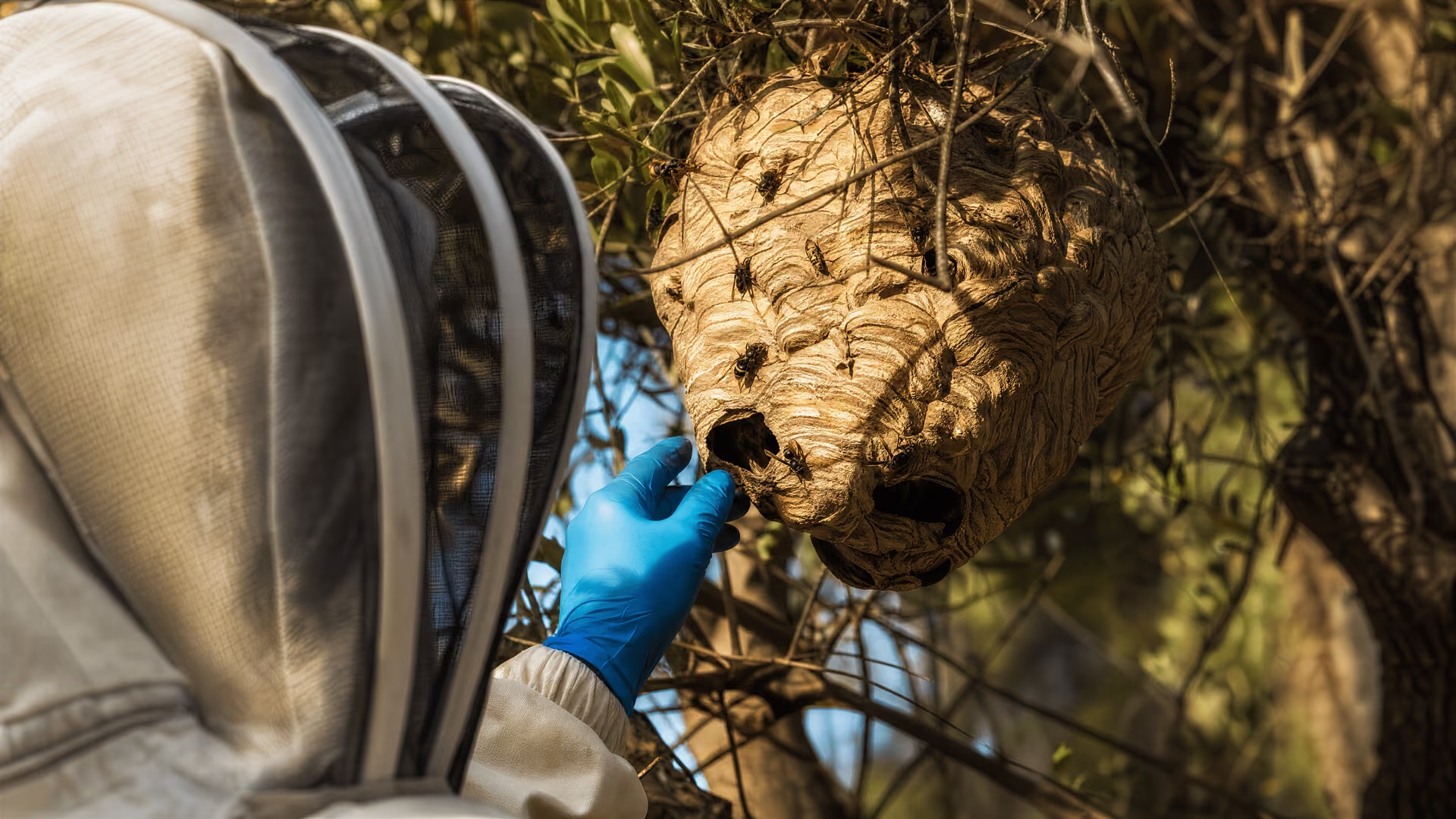
Ibiza has confirmed its first-ever Oriental wasp nest, prompting the Balearic Government to launch surveillance measures over fears the invasive predator could threaten the island's 3,765 honeybee hives. The nest, found in the urban area of Jesús, in the municipality of Santa Eulària, has already been removed, but authorities stress that one confirmed nest alone does not yet prove the species, Vespa orientalis, has permanently established itself. The owner's report on the Ibiza discovery places the immediate focus on early detection, removal and monitoring.
Ibiza’s first nest triggers a regional alert
The nest was detected in Jesús, a built-up area of Santa Eulària, and represents the first confirmed nesting of the Oriental wasp on Ibiza. A local resident raised the alarm after noticing wasps that appeared different from the German wasp, Vespula germanica, the species most commonly seen in the area. She supplied photographs that enabled the insects to be identified.
The finding is significant because it shows that the species has not merely arrived on the island: at least one fertilised queen has survived, founded a colony and reproduced. That does not mean the Oriental wasp is permanently established across Ibiza. The Balearic Government has said that a single nest could still reflect an isolated introduction, potentially linked to the accidental movement of goods.
The scale of the concern can be understood through four facts about the island, the insect and the pollination system:
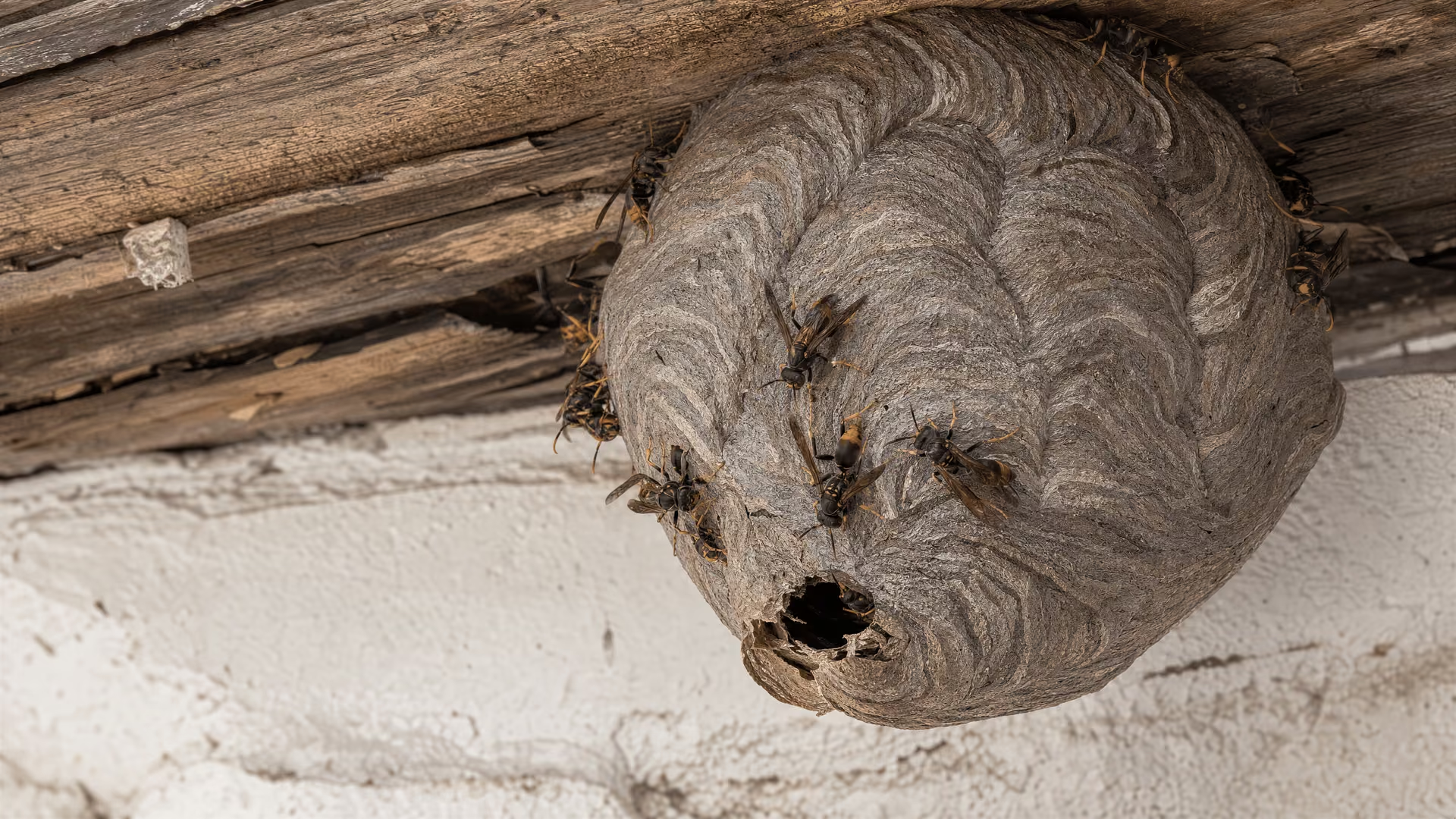
The Oriental wasp can be distinguished from the common German wasp by both size and appearance:
| Feature | Oriental wasp | German wasp | Source |
|---|---|---|---|
| Typical length | 2–2.5 cm | 1.2–1.7 cm | The oriental wasp raises alarms in Ibiza |
| Queen size | Can exceed 3 cm | Not stated in the report | The oriental wasp raises alarms in Ibiza |
| Colour pattern | Reddish or brown body with a broad yellow abdominal band | Characteristic yellow-and-black pattern | The oriental wasp raises alarms in Ibiza |
The nest itself also has a distinctive structure. The insects tear fibres from wood with their jaws and mix them with saliva, creating a paper-like structure divided into horizontal compartments with hexagonal cells where the larvae develop:
Why beekeepers fear pressure on honeybee colonies
The main concern is the species’ relationship with the honeybee, Apis mellifera. Oriental wasp larvae require protein as they develop, and workers obtain it by capturing insects, including honeybees, flies and smaller wasps. The workers carry their prey back to the nest to feed the larvae.
The pressure is expected to be greatest during summer and autumn, when colonies reach their largest size. In winter, activity falls and only fertilised queens survive, remaining dormant until spring. This seasonal cycle is one reason beekeepers and environmental officials are treating the first Ibiza nest as an early warning rather than an isolated curiosity.
It is lethal for bees.
Vicent Marí, Association of Beekeepers of Ibiza and Formentera
Marí, who also presides over Ibiza’s protected designation for honey, has warned that the insect could establish nests not only in wooded areas but also close to apiaries. Its ability to adapt to urbanised and heavily modified environments increases the possibility of contact with beekeeping operations. The threat described by the island’s apiculture sector has three connected elements:
- Direct predation of honeybees by workers that capture them for the developing larvae.
- Stress on colonies, which can reduce their foraging activity even when the insects are not being captured directly.
- Possible effects on fruit, vegetables, crops and pollination if the species becomes established at higher densities.
The Balearic Department of Agriculture, Fisheries and Natural Environment has described the Oriental wasp as one of the principal threats to apiculture in places where it reaches high densities. The concern extends beyond honey production. The beekeepers’ association says that 70% of the food production people consume depends on pollination, linking the protection of colonies to the wider agricultural system.
That does not mean the discovery has already caused measurable damage to Ibiza’s crops or hives. The facts supplied so far describe a potential threat and an active surveillance response. The central question is whether further colonies are found during the current period of biological activity.
An accidental route through Spain and the Balearic Islands
The Ibiza discovery forms part of a broader spread of Vespa orientalis through Spain and the Mediterranean. The species is native to the eastern Mediterranean and the Middle East. Its presence in Spain was first confirmed in 2013 in the Valencian Community, and the Balearic Government says established populations are now present in parts of southern mainland Spain, including Málaga, Cádiz and the Campo de Gibraltar.
The first confirmed presence in the Balearic Islands came in October of the previous year, when a nest was located near homes in Esporles, Mallorca. Ibiza is therefore not the first island in the archipelago where the species has been detected, but its first confirmed nest shows that the problem has reached another island. A technical warning about suitable conditions in the Pitiusas has added to the concern about possible expansion.
The route between locations is thought to be accidental rather than a deliberate release. Fertilised queens can spend the winter hidden in containers, pallets, vehicles or construction materials. The movement of goods by sea and road can therefore transport them between mainland areas and islands, as well as between the Balearic Islands themselves.
For the authorities, this makes transport and early detection central to the response. The precise origin of the Ibiza and Mallorca nests is not yet established. The University of the Balearic Islands plans to analyse the recovered nests through genetic studies, which could help clarify whether the island colonies share a recent origin or arrived through separate introductions.
The locations currently documented in the supplied reports show how the alert has developed:
| Location | Reported development | Why it matters | Source |
|---|---|---|---|
| Valencian Community | First confirmed presence in Spain in 2013 | Marks the beginning of the documented Spanish spread | The oriental wasp raises alarms in Ibiza |
| Esporles, Mallorca | First detection in the Balearic Islands, in October of the previous year | Established the species’ presence in the archipelago | The oriental wasp raises alarms in Ibiza |
| Jesús, Ibiza | First confirmed nesting on Ibiza | Shows that at least one fertilised queen reproduced on the island | The oriental wasp raises alarms in Ibiza |
The Balearic Government moves to contain the risk
The Balearic Government’s Service for Species Protection, within the Department of Agriculture, Fisheries and Natural Environment, has activated a surveillance protocol designed to prevent the species from spreading. The protocol had already been reinforced in Mallorca, and the Ibiza discovery has extended the focus of monitoring to the Pitiusan island.
The nest found in Jesús has been removed. The next phase will continue throughout the Oriental wasp’s period of biological activity. The Balearic Consortium for the Recovery of Wildlife, known as COFIB, is also tracking the situation and looking for signs of additional colonies. A report on the removal of the nest and strengthened monitoring measures describes the response as an effort to identify new outbreaks at an early stage.
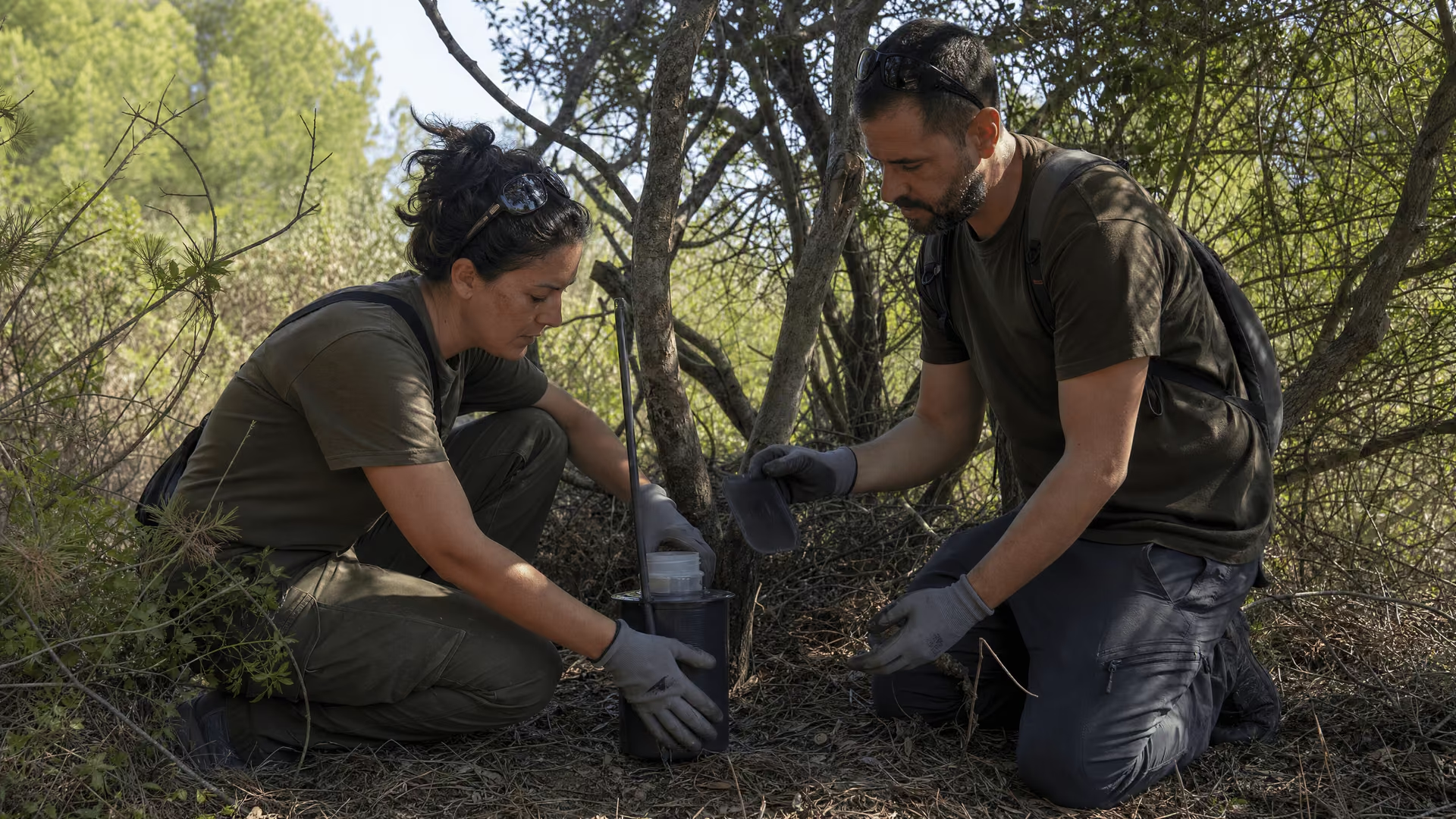
Officials plan to install traps containing sweet attractants. Their purpose is to detect workers and help locate any further colonies, not to provide a complete picture from a single intervention. Continued observation is considered necessary because the presence of one reproductive colony does not reveal whether other queens or nests are already present elsewhere on Ibiza.
The surveillance effort also reflects the speed at which invasive wasps can reproduce. Experts cited in the supplied reporting say reaction time is crucial because the reproductive rate can be very high. For Ibiza, the coming monitoring period will provide more meaningful evidence than the discovery of a single nest alone:
What residents should do after a suspected sighting
The Department of Agriculture, Fisheries and Natural Environment is asking residents to help with detection, while warning them not to handle a wasp or nest. A photograph can assist identification if it can be obtained safely. Repeated sightings of large wasps near certain structures may also help officials identify areas that require closer inspection.
The public guidance supplied by the Balearic authorities can be reduced to these steps:
- Do not manipulate or disturb a suspected Oriental wasp or nest.
- Report the sighting to the Balearic Government’s Service for Species Protection.
- Provide a photograph where possible to support identification.
- Note repeated activity near walls, roofs, garages, warehouses or other cavities, where the species may establish colonies.
The advice is particularly relevant because the insect can use both natural and human-made environments. The first Ibiza nest was found in an urban setting rather than in a remote area, reinforcing the authorities’ request that residents pay attention to activity around buildings and storage spaces.
Questions raised by the Ibiza discovery
Does the first nest prove that the Oriental wasp is permanently established on Ibiza?
No. The Balearic Government says that one nest confirms reproduction by at least one fertilised queen but is not enough to establish permanent presence across the island.
Why is the species a concern for Ibiza’s beekeepers?
The Oriental wasp preys on honeybees, and the stress caused by its presence can reduce colony foraging activity. Ibiza has 3,765 honeybee hives that could be affected if the species becomes established.
Where might residents notice further nests or repeated activity?
The authorities advise paying attention to walls, roofs, garages, warehouses and other cavities, as well as repeated sightings of large wasps.
How might the species have reached the island?
The Balearic Government points to accidental transport. Fertilised queens can remain hidden in containers, pallets, vehicles or construction materials moved by sea or road.
The next evidence will come from surveillance
For now, Ibiza is dealing with a confirmed reproductive event but not a proven island-wide establishment. The nest in Jesús has been removed, and the authorities are using the remainder of the active season to look for workers and any additional colonies. Genetic analysis by the University of the Balearic Islands may later provide more information about how the Balearic nests are related.
The stakes are both ecological and agricultural. Honeybees support pollination, while the Oriental wasp can also consume fruit and other plant material. That combination explains why the Balearic Government, COFIB and Ibiza’s beekeepers are treating the first nest as a development requiring sustained attention, not as a standalone local incident.
The immediate test is clear: whether monitoring finds further activity before the species can establish more colonies on Ibiza.
Ibiza’s first Oriental wasp nest has brought the island into a wider Spanish story of invasive-species spread, but the final outcome remains open. The Balearic Government’s response now depends on surveillance, public reporting and the rapid removal of any further colonies. For the island’s beekeepers, the priority is to prevent a single reproductive event from becoming an established threat to honeybees and pollination.
Sources
- La avispa oriental despierta las alarmas en Ibiza: "Es letal para las abejas" (eldiario.es)
- Irene Garneria, tècnica del Servei de Protecció d’Espècies: “Les condicions climàtiques d’aquí són idònies per a la vespa oriental” (radioillaformentera.cat)
- Detección del primer nido de avispa oriental en Eivissa, un avance en control biológico (noticiesbalears.com)